Direct Admission in BTech Colleges in Lucknow
A complete guide to direct admission in BTech colleges in Lucknow, covering what direct admission means, eligibility criteria, the step-by-step application process, fee structures, popular branches, verification steps, common mistakes, and the typical admission timeline — helping students find a legitimate seat outside the standard JEE/counselling route.
⚡ Quick Answer
admission in BTech colleges in Lucknow lets students secure a seat without regular JEE/UP counselling, through management quota, vacant seats, or private university entrance routes — provided the college holds valid AICTE approval and AKTU affiliation.
📌 Key Takeaways
- Direct admission works through management quota, NRI quota, or vacant seats after counselling rounds Always verify AICTE approval and AKTU affiliation before paying any fee Computer Science and IT branches fill fastest, so early application matters Peak direct admission window is typically late August to September Get the fee structure and admission terms in writing before committing Diploma holders can use lateral entry to join the second year directly
Lucknow, the capital city of Uttar Pradesh, has steadily grown into one of North India’s most important engineering education hubs. With a mix of government-aided institutions, private universities, and technical colleges affiliated to Dr. A.P.J. Abdul Kalam Technical University (AKTU), the city offers students a wide spectrum of choices when it comes to pursuing a Bachelor of Technology degree. For many students and parents, however, the admission process — especially when counselling seats are limited or a preferred branch isn’t available through the regular route — can feel confusing. This is where the concept of direct admission in BTech colleges in Lucknow becomes relevant.
This guide walks you through everything you need to know about direct admission: what it means, which colleges offer it, eligibility criteria, the application process, fee structures, and how to avoid common pitfalls along the way.
What Does “Direct Admission” Mean in the BTech Context?
Direct admission refers to a pathway where a student secures a seat in a BTech program without going through the centralized counselling process tied to entrance exams like JEE Main or the UP state-level engineering entrance test. Instead, admission is granted based on factors such as:
- Class 12 marks (particularly in Physics, Chemistry, and Mathematics)
- Management quota seats offered by private institutions
- NRI quota seats
- Vacant seats left after regular counselling rounds conclude
- Institution-specific entrance tests conducted independently by some private universities
It’s important to understand that “direct admission” does not mean bypassing eligibility norms altogether. Every BTech college in Lucknow, whether government-affiliated or private, must still follow the guidelines set by AKTU, the All India Council for Technical Education (AICTE), and the state’s technical education department. What direct admission really offers is a simplified, faster route for students who may have missed the entrance exam cycle, scored below the counselling cutoff, or simply prefer applying directly to a specific institution.
Why Do Students Look for Direct Admission?
There are several genuine reasons why students and parents actively search for BTech colleges in Lucknow offering direct admission:
Missed entrance exam deadlines. Some students decide on engineering as a career path later than others, after JEE Main or state counselling registration windows have already closed.
Below-cutoff scores. A student may have appeared for the entrance exam but not scored high enough to get their preferred branch or college through regular counselling.
Preference for a specific college or branch. Sometimes a student has their heart set on a particular institution — perhaps because of its location, faculty reputation, or placement record — and wants to secure a seat there directly rather than risk not getting it through counselling.
Lateral entry after diploma. Diploma holders looking to join the second year of a BTech program often use a semi-direct admission route through lateral entry, which functions differently from the standard first-year process but is commonly grouped under the same search intent.
Management and NRI quota availability. Private colleges typically reserve a percentage of seats for management and NRI quota candidates, and these are filled through direct admission rather than the state counselling body.
Types of BTech Colleges in Lucknow
Before deciding on a direct admission route, it helps to understand the landscape of BTech colleges in Lucknow:
Government and Government-Aided Institutions
These include well-established names that primarily fill seats through JEE Main and UP state counselling. Direct admission opportunities here are limited and generally restricted to seats that remain vacant after multiple rounds of counselling, subject to AKTU’s approval and published vacancy lists.
Private Deemed and State Private Universities
Lucknow is home to several private universities that run their own BTech programs. These institutions typically have more flexibility in admissions and often accept students through a combination of entrance scores, board exam percentages, and personal interviews. Many of these universities actively offer direct admission to eligible candidates once their internal application process is complete.
Affiliated Private Engineering Colleges
A large number of private engineering colleges in and around Lucknow are affiliated with AKTU. These colleges follow the centralized counselling process for the bulk of their seats but also have management quota seats that can be filled through direct admission, in line with AKTU’s fee and reservation policies.
Eligibility Criteria for Direct Admission
While specific requirements can vary slightly between institutions, most BTech colleges in Lucknow that offer direct admission expect candidates to meet the following baseline criteria:
- Successful completion of Class 12 (or equivalent) with Physics, Chemistry, and Mathematics as core subjects
- A minimum aggregate score, commonly set around 45-50% for general category candidates, with relaxations for reserved categories as per state norms
- A valid JEE Main score is preferred by many institutions even for management quota seats, though some private universities also accept their own entrance test scores or board marks alone
- For lateral entry into the second year, a diploma in engineering or a BSc degree with the required subject combination
Students should always verify the exact eligibility criteria on the official website of the specific college they are targeting, since AKTU and AICTE periodically update guidelines, and individual institutions may have additional requirements.
Step-by-Step Direct Admission Process
Here is a general outline of how the direct admission process typically unfolds for BTech colleges in Lucknow:
1. Shortlist colleges based on your priorities. Consider factors like branch specialization, campus infrastructure, faculty strength, industry tie-ups, and placement history rather than choosing a college solely because a seat is easily available.
2. Check official vacancy or quota seat information. For AKTU-affiliated colleges, vacant seat lists are published by the university after each counselling round. For private universities, this information is usually available through their admissions office or website.
3. Submit required documents. Typical documents include Class 10 and 12 mark sheets, transfer certificate, migration certificate, category certificate (if applicable), JEE Main scorecard (if available), passport-size photographs, and identity proof.
4. Pay the applicable fee. Direct admission seats, particularly management quota seats, often carry a different fee structure than counselling-allotted seats. It’s important to get complete fee clarity in writing before making any payment.
5. Complete verification and seat confirmation. Once documents are verified and fees are paid, the college issues an admission confirmation letter, and the student is enrolled in the program.
6. Register with the university. Following institutional admission, most colleges also require students to complete a formal registration with AKTU or the respective affiliating university.
Popular Branches Available Through Direct Admission
Most BTech colleges in Lucknow offering direct admission provide access to a fairly comprehensive range of engineering branches, including:
- Computer Science and Engineering (CSE)
- Information Technology (IT)
- Electronics and Communication Engineering (ECE)
- Mechanical Engineering
- Civil Engineering
- Electrical Engineering
- Artificial Intelligence and Machine Learning (a newer, increasingly popular specialization)
- Computer Science with specializations in Data Science or Cybersecurity
Computer Science and its allied specializations tend to be the most sought-after and, consequently, the branches where direct admission seats fill up fastest — so early application matters if this is your preferred stream.
Fee Structure: What to Expect
Fee structures for direct admission vary considerably depending on the type of institution:
- Government and government-aided colleges have fees regulated by the state and are relatively low, but direct admission avenues here are minimal.
- Private AKTU-affiliated colleges usually have a fee range approved by the Fee Regulatory Committee, and management quota seats may carry a marginally higher fee than counselling seats, though this is capped and regulated.
- Private universities with more autonomy in fee-setting typically have higher annual fees, but these often include additional infrastructure, hostel, and placement support services.
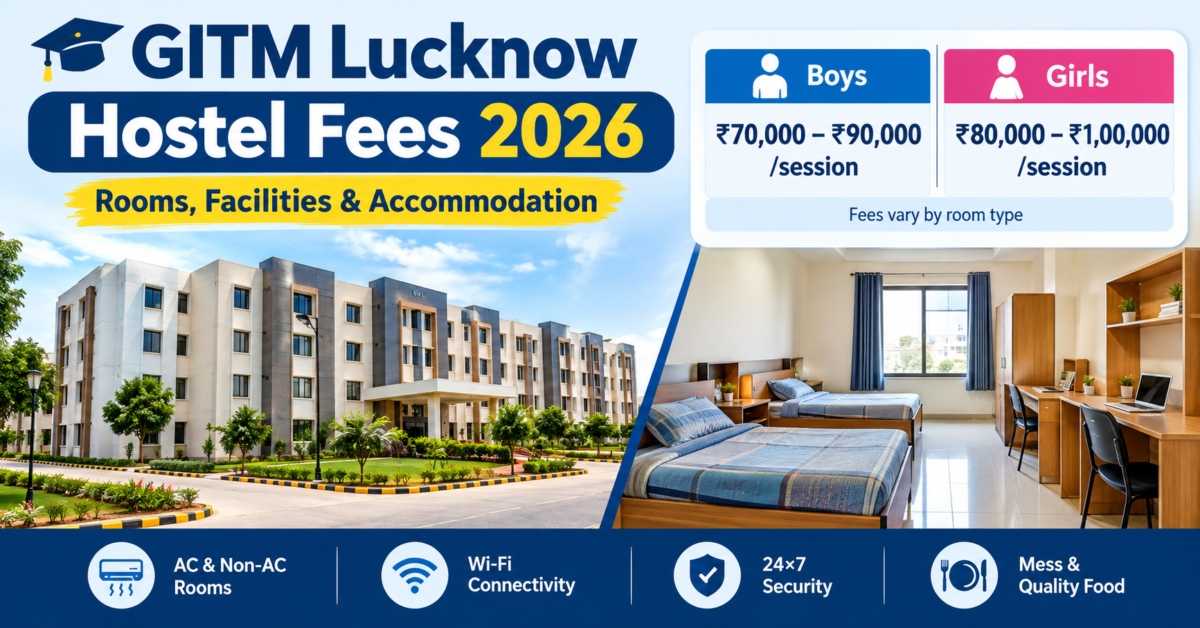
Before committing to any college, students should request a detailed fee breakup covering tuition, examination fees, hostel charges (if applicable), and any one-time admission or development fees, ideally in writing or through the official fee structure document published by the institution.
How to Verify a College Before Taking Direct Admission

Given that direct admission bypasses some of the checks built into centralized counselling, due diligence becomes the student’s responsibility. Here’s how to verify a college’s legitimacy:
Check AICTE approval status. Every legitimate engineering college must have current AICTE approval, which can be verified on AICTE’s official portal using the institution’s name or approval ID.
Confirm AKTU affiliation. For colleges claiming AKTU affiliation, this can be cross-checked on AKTU’s official website, which maintains a list of affiliated institutions.
Review NAAC or NBA accreditation. While not mandatory, accreditation from bodies like NAAC (National Assessment and Accreditation Council) or NBA (National Board of Accreditation) is a strong indicator of academic quality.
Look into placement records. Ask for verifiable placement statistics from the last two to three years, including the list of recruiting companies and average/highest packages offered.
Visit the campus if possible. Physical infrastructure — labs, libraries, hostels, classrooms — often tells a more accurate story than a college’s website or brochure.
Avoid agents promising guaranteed seats for unusually high “donations.” Legitimate direct admission processes are transparent and documented. Be cautious of intermediaries who ask for large cash payments outside official fee receipts.
Common Mistakes to Avoid
Many students rush the direct admission process out of anxiety about losing a seat, which sometimes leads to costly mistakes:
- Paying fees before verifying the college’s AICTE approval and AKTU affiliation
- Not getting the fee structure and admission terms in writing
- Ignoring the placement and academic track record of the branch they’re choosing
- Relying entirely on unofficial admission consultants without cross-verifying their claims
- Overlooking hostel and campus safety standards, especially for students relocating from other cities or states
Taking a day or two to verify credentials rarely results in losing a seat at a legitimate institution, since most colleges keep management and vacant seats open for a reasonable admission window.
Timeline: When Does Direct Admission Happen?
Direct admission activity in BTech colleges in Lucknow typically follows this broad pattern each academic year:
- June-July: JEE Main results and UP state counselling registrations begin; this is also when many private universities start their own direct admission and entrance test processes.
- August: Multiple rounds of state counselling take place; vacant seats start becoming visible after each round.
- Late August-September: This is peak season for direct admission, as colleges look to fill remaining seats before the academic session begins.
- October (in some cases): A limited additional window may open for a small number of leftover seats, particularly in private colleges, though this varies year to year and should be confirmed directly with the institution.
Because these windows can shift from year to year based on AKTU’s academic calendar, students are advised to track official announcements closely during the admission season rather than relying solely on secondhand information.
Final Thoughts
Direct admission is a legitimate and often practical pathway for students who want to join BTech colleges in Lucknow but, for one reason or another, haven’t secured a seat through the standard entrance exam and counselling route. The key to making this process work in your favor lies in doing careful research: confirming a college’s approvals and affiliations, understanding the true fee structure, evaluating academic and placement quality, and steering clear of unofficial shortcuts that promise guaranteed seats for a price.
Lucknow’s engineering education ecosystem has matured significantly over the past decade, with several institutions building strong reputations in specific branches, particularly Computer Science, IT, and emerging fields like AI and Data Science. Whether you’re a student who missed the JEE Main window, someone looking to switch colleges, or a diploma holder pursuing lateral entry, there are structured, transparent routes available — as long as you approach the process with patience and proper verification.
If you’re currently exploring your options, start by shortlisting three to five BTech colleges in Lucknow that align with your branch preference and budget, reach out to their admissions offices directly, and compare their direct admission terms side by side before making a final decision.
Helpful answers
Frequently asked questions
Is direct admission in BTech colleges in Lucknow legal?
Yes, when done through official management quota or vacant-seat routes at AICTE-approved, AKTU-affiliated institutions, direct admission is fully legitimate.
Do I need a JEE Main score for direct admission
Not always — many private universities accept board exam scores or their own entrance tests, though a JEE Main score is preferred by several colleges even for management quota seats.
Can diploma holders get direct admission into BTech?
Yes, through lateral entry, diploma holders can join directly into the second year of a BTech program at eligible colleges.
What is the minimum eligibility for direct admission?
Most colleges require Class 12 with Physics, Chemistry, and Mathematics, and around 45–50% aggregate marks, with relaxations for reserved categories.
How do I check if a college is genuine before paying fees?
Verify AICTE approval on AICTE's official portal and confirm AKTU affiliation on AKTU's website before making any payment.
Reader feedback